
Search

La Petite Histoire de France
2015
**1810:** Renata Plancher, cousin of Napoleon, Jean Plancher, and their son Baptiste run an inn, "Chez Bonaparte," in Paris, Faubourg Saint-Honoré. Jean complains that the Emperor has shown them no regard since coming to power. **1695:** Count Philippe Honoré de Roche Saint-Pierre, cousin of Louis XIV, was dismissed from Versailles by the king. He lives with his wife Marie-Louise at the Château de La Croûtinière, 250 kilometers from Versailles. **1430:** François d'Arc is the cousin of Joan of Arc. He lives in Domrémy, Joan's birthplace, with his wife Ysabeau and Gaspard, a sheep breeder. François tries by all means to free his cousin, who is imprisoned by the Burgundians. **1:** Yorik is the cousin of Vercingetorix. He lives at the salt mine of Marsal, in Gallo-Roman Moselle, with his wife Maëlle, his son Briac, his daughter Gwénola, Burgal, Maëlle's brother, and Lena, Yorik's mother.

Laurence Leboeuf
Cast · Known for The Stunt Driver
Laurence Charlotte Leboeuf (born December 13, 1985) is a Canadian actress. Leboeuf was born on December 13, 1985, in Montreal, Quebec, the daughter of actors Marcel Leboeuf and Diane Lavallée. She went to École Notre-Dame-de-Grâce for elementary and later on, she went to Villa Maria for high school. She made her acting debut as Évelyne Boivin in the French Canadian television series Virginie.[citation needed] Later, she played Louise Lavigueur in the Quebec television series Les Lavigueur, la vraie histoire, and more recently as Apple in Turbo Kid. She won the Prix Jutra for Best Supporting Actress at the 10th Jutra Awards, and received a Genie Award nomination for Best Supporting Actress at the 28th Genie Awards, for her performance in the 2007 film My Daughter, My Angel (Ma fille mon ange).[citation needed] She has also received Canadian Screen Award nominations for Best Supporting Actress in a Drama Series for 19-2 at the 3rd Canadian Screen Awards and the 4th Canadian Screen Awards, and Québec Cinéma nominations for Best Actress at the 17th Jutra Awards for The Little Queen (La petite reine) and at the 18th Quebec Cinema Awards for Turbo Kid. At the 10th Canadian Screen Awards in 2022, she won the award for Best Actress in a Drama Series for her performance as Magalie Leblanc in Transplant.

Marie-Ève Bertrand
Diplômée du Conservatoire d’art dramatique de Montréal en 1998, Marie-Ève Bertrand remporte le PRIX DE LA MEILLEURE ACTRICE au Festival de Verone en Italie (2002), pour son interprétation du film MARIAGES (Catherine Martin). Toujours au cinéma, Marie-Ève récidive avec Catherine Martin dans UNE JEUNE FILLE, elle est aussi de la distribution du dernier film de Ricardo Troggi 1987. Elle s’est aussi distinguée au théâtre dans CHACUN SA VÉRITÉ (B. Dagenais), en solo dans VENISE (Prospéro), UNE ÎLE ET UN DÉSERT (S. Mandeville), ROMANCE ET KARAOKÉ (Théâtre Le Clou). Elle collabore à plusieurs reprises avec Martine Beaulne à la cie Jean Duceppe dans UN CARRÉ DE CIEL, LE DOUTE et le LE DÉNI. Au petit écran, on a aimé la détester dans EMMA, pour son rôle de Myriam Bernier. Elle interprète, depuis 2 ans, Éléanna dans la série jeunesse LES ARGONAUTES. Marie-Ève a aussi enfilé des rôles épisodiques dans TOUT SUR MOI, LE PLATEAU, HISTOIRES DE FILLES, VIRGINIE et GYPSIES (F. Bouvier).

Louise Laparé
Louise Laparé (born November 24, 1949) is an actress, known for Battle of the Brave (2004), The Rainbow Warrior Conspiracy (1988) and La petite patrie (1974). She is married to actor Gaston Lepage since November 24, 1979.

Marc Labrèche
Marc Labrèche was born on 20 November 1960 in Montréal, Québec, Canada. He is an actor, director and TV host mostly known for Le coeur a ses raisons (2005) and La Petite Vie (1993). He is the father of actress Léane Labrèche-Dor.

Alexandre Trauner
Production Design · Known for Witness for the Prosecution
Alexandre Trauner (born Sándor Trau; 3 August 1906 in Budapest, Hungary – 5 December 1993 in Omonville-la-Petite, France) was a Hungarian film production designer. After studying painting at Hungarian Royal Drawing School, he left the country in 1929, fleeing from the antisemitic government of Admiral Horthy. In Paris, he became the assistant of set designer Lazare Meerson, at the studios in Épinay-sur-Seine working on such films as À nous la liberté (1932) and La Kermesse héroïque (1935). In 1937, he became a chief set designer. Trauner worked with director Marcel Carné for some years on such films as Port of Shadows (Quai des brumes, 1938), Le Jour se lève (1939), and Children of Paradise (Les Enfants du paradis, 1945). Trauner worked in hiding on Children of Paradise, which was filmed at the Victorine Studios in Nice during 1943 and 1944 during the Nazi's Occupation of France. He worked with Billy Wilder on eight films between 1958 and 1978, including the sets for The Apartment (1960), on which he made use of false perspective, a characteristic of his work. For his work on this film, he won an Academy Award. He also worked on John Huston's The Man Who Would Be King (1975), Joseph Losey's Don Giovanni (1979), and Luc Besson's Subway (1985). In 1980, he was a member of the jury at the 30th Berlin International Film Festival. Source: Article "Alexandre Trauner" from Wikipedia in English, licensed under CC-BY-SA.
Vincent Leclerc
Cast · Known for The Revenant
Vincent Leclerc is a Canadian actor from Trois-Rivières, Quebec. He is most noted for his performance in the 2018 film The Fall of the American Empire (La chute de l'empire américain), for which he received a Prix Iris nomination for Best Supporting Actor at the 21st Quebec Cinema Awards in 2019, and his starring role as Séraphin Poudrier in the television series Les Pays d'en haut, for which he won the Gémeaux Award for Best Actor in a Short Run Drama Series in 2016. He was also a Canadian Screen Award nominee for Best Performance in a Program or Series Produced for Digital Media at the 4th Canadian Screen Awards in 2016 for the web series Coming Out. He has also appeared in the films Piché: The Landing of a Man (Piché, entre ciel et terre), The Storm Within (Rouge sang), White House Down, The Little Queen (La Petite Reine), Gurov and Anna and Days of Happiness (Les Jours heureux), and the television series Mauvais karma, Being Human, 19-2 (French), 19-2 (English), This Life, Bellevue, Bad Blood, District 31 and Way Over Me (Sortez-moi de moi).
Éric Savin
Éric Savin (born Dijon, 14 November 1964) is a French film and TV actor. Savin comes from a rugby family, which meant he was more interested in a sports career. But a strong conviction led him to Paris to try a career as an actor. He was a hospital agent at the Bichat hospital in Paris from 1985 to 1988, and then passed the (Drama school) Cours Florent free class competition. It was during an audition that he met Xavier Durringer (playwright , screenwriter and filmmaker) with whom he still works today. He made his stage debut in 1989 in Lorenzaccio (written by Alfred de Musset) directed by Francis Huster. Bertrand Tavernier entrusted him with his first cinema role in 1992, as Inspector Lefort in L.627. He then alternated between theater, television and cinema. His first theatre successes came with Durringer's shows like La Petite Entaille in 1991, or Sureur in 1997, presented at the Avignon Festival. In 1993, he starred with actress Karin Viard in La nage indienne (the Indian Swim), in the first feature film by Durringer. Then he had several supporting roles including Giordano in Emmène-moi (Take me) by Michel Spinosa, distinguished at the Berlin International Film Festival and Captain Conan again with Tavernier in 1996, followed by I Hate Love (J'ai horreur de l'amour) by Laurence Ferreira Barbosa in 1997 then in 1998 social film Une minute de silence ('One minute of silence') the first film of Florent Emilio Siri. He returned to work with Durringer on J'irai au paradis car l'enfer est ici (I'll go to heaven because hell is here) in 1997, film is about gangsters. He gets a nomination to the Sept d'or for his portrayal of a divorced father who kidnaps his daughter in the TV movie Vacances volées (or Stolen Vacation), it was directed by Olivier Panchot. He also accompanies many filmmakers and directors from short to feature film, such as Laurent Firode (Les astres (The Stars) in 1998, Happenstance (The Butterfly's Wing Flapping) in 2000), with Pierre-Erwan Guillaume in Bonne résistance à la douleur, (Good resistance to pain) in 1999 and L'Ennemi naturel (The Natural Enemy) in 2004. Then with Lyčče Boukhitine for which he takes the character in her short film La Vielle barrière (The old barrier), which won a 'jury prize' at the festival of Clermont-Ferrand in 1998. Finally in 2002, he plays in the famous short film Squash directed by Lionel Bailliu, which was multi-award-winning in several festivals around the world, including the interpretation prize in Clermont-Ferrand. Lionel Bailliu won an Oscar nomination in 2004 for Best Live Action Short Film. This performance leads Éric Savin to take the leading role of the compulsive domineering boss in the feature film adaptation in 2006 entitled Fair Play where he shares the poster with Marion Cotillard and Benoît Magimel. ... Source: Article "Éric Savin" from Wikipedia in English, licensed under CC-BY-SA.

Hubert Noël
Hubert Noël (1924–1987) was a French film actor. A student at the Cours Simon, he made his theatrical debut with Charles Dullin in L'Avare, then moved on to the Centre Dramatique de l'Est, the Théâtre du Vieux-Colombier and the Théâtre du Gymnase, with prestigious partners such as Marie Bell. An actor with a pleasing physique, he played secondary roles in films, often not very rewarding, as troubled, self-interested characters or superficial, fickle lovers. He played Philippe de Nevers in André Hunebelle's Le Bossu in 1959, Danielle Darrieux's lover in Julien Duvivier's Le Diable et les Dix Commandements in 1962, Marina Vlady's lover in Christian-Jaque's Les Bonnes Causes and Dany Carrel's lover in André Cayatte's Piège pour Cendrillon in 1965. From the 1970s onwards, he only appeared in third roles, such as a bank clerk in Nicolas Gessner's La Petite Fille au bout du chemin in 1976. He specialized in dubbing, lending his voice to Tony Curtis, Elvis Presley and Gardner McKay in the TV series Aventures dans les îles, broadcast by Radiodiffusion-télévision française from February 11, 1961. Source: Article "Hubert Noël" from Wikipedia in English, licensed under CC-BY-SA.

Micheline Lanctôt
Micheline Lanctôt (born May 12, 1947) is a Canadian actress, film director, screenwriter, and musician. Lanctôt was born in Frelighsburg, Quebec. Her post-secondary education was in music, fine arts, and theatre at Collège Jésus-Marie in Outremont, and in art history at the Université de Montréal and the École des Beaux-Arts de Montréal; she later studied film animation at the National Film Board of Canada (NFB) and then at Gerald Potterton's studios, Potterton Productions, where she remained for four years. Lanctôt began her acting career in 1972, winning a Canadian Film Award for Best Actress for her starring role in Gilles Carle's The True Nature of Bernadette (La vraie nature de Bernadette). Since then, she has appeared in a wide variety of film and television roles, such as Carle's The Heavenly Bodies (Les Corps Célestes), Ted Kotcheff's award-winning The Apprenticeship of Duddy Kravitz, Claude Chabrol's Blood Relatives and Guy Fournier's Radio-Canada TV series Jamais deux sans toi. She has directed for the theatre also, directing Oleanna by David Mamet for the Théâtre de Quat'Sous in Montreal in 1994, and in 1999, Bousille et les justes by Gratien Gélinas for the Théâtre du Rideau Vert. She began her live-action film-directing career with The Handyman (L'Homme à tout faire) (1980), nominated for best direction and for best film at the Genie Awards in 1981. This success was followed by Sonatine (1984), which launched the career of Pascale Bussières and won both the Genie Award for Best Director at the 6th Genie Awards in 1985, and the now-defunct Silver Lion for Best First Film (1983-1987) at the 41st Venice International Film Festival. Since 1982, Lanctôt has been a part-time instructor in the Mel Hoppenheim School of Cinema at Concordia University. Lanctôt defended Gaétan Soucy's novel The Little Girl Who Was Too Fond of Matches (La petite fille qui aimait trop les allumettes) in the 2004 edition of Le Combat des livres, broadcast on Première Chaîne. In 2016 she was the curator of the Festival Vues dans la tête de... film festival in Rivière-du-Loup. She is also a matron of the Prix collégial du cinéma québécois, an annual program engaging film studies students in Quebec CEGEPs to present an award for the year's best Quebec film.

Lil' Kim
Lil’ Kim (born Kimberly Denise Jones on July 11, 1974, in Bedford-Stuyvesant, Brooklyn, New York) is an American rapper, singer, songwriter, actress, and model known for her sexually explicit lyrics, bold fashion, and pioneering role in female hip-hop & pop culture. Standing just 4′11″, she earned her stage name from her petite stature. Discovered by The Notorious B.I.G. (with whom she had a romantic relationship), she joined his group Junior M.A.F.I.A. in 1994; their album Conspiracy (1995) produced hits featuring her. Her solo debut, Hard Core (1996), went double platinum and established her as a trailblazer with songs like “No Time” and “Crush on You.” Follow-up albums included The Notorious K.I.M. (2000), La Bella Mafia (2003), The Naked Truth (2005) & 9 (2019). She scored a worldwide No. 1 hit and a Grammy with the 2001 collaboration “Lady Marmalade” (with Christina Aguilera, P!nk, and Mýa). Lil’ Kim has appeared in several films and television projects over the years. In 1999 she made her feature-film debut in the teen comedy She’s All That, playing Alex, a stylish friend of the main characters. She followed this with a brief cameo as herself in Ben Stiller’s fashion satire Zoolander (2001), then took a supporting role as Tina Parker in the sports comedy Juwanna Mann (2002). In 2003 she portrayed Chastity, a member of an all-female outlaw gang, in the Western Gang of Roses. The next year she appeared as herself in the dance film You Got Served and in the comedy Nora’s Hair Salon. She also provided the voice of Sweet Chiffon in the animated feature Lil’ Pimp (2005) and later played Xavier’s Daughter in the parody Superhero Movie (2008). More recently she appeared as Zsa Zsa Hottest in the 2021 holiday TV movie Miracles Across 125th Street. On television, Lil’ Kim starred in the 2006 reality series Lil’ Kim: Countdown to Lockdown, which documented her life leading up to her prison sentence. She served as a judge on the competition shows The Pussycat Dolls Present: The Search for the Next Doll (2007) and its spin-off Girlicious (2008). In 2009 she competed on season 8 of Dancing with the Stars, partnered with Derek Hough. Her most recent major reality project was the 2019 VH1 series Girls Cruise, which she also executive-produced; the show followed her, Mýa, TLC’s Chilli, and a group of friends on a Caribbean cruise centered on friendship and personal growth.

Jean-Baptiste Maunier
Cast · Known for The Chorus
Jean-Baptiste Maunier (born December 22, 1990) is a French actor and singer. He is best known for his role in the 2004 French film Les Choristes. Jean-Baptiste Maunier was born to Thierry Maunier, a cameraman, and Muriel Maunier. He has a younger brother, Benjamin. His father sang in a well-known church choir (Les Petits Chanteurs de Saint Marc). Jean-Baptiste attended a Roman Catholic school in Lyon, France. He studied at the Lee Strasberg Institute in New York between 2008 and 2009 to perfect his acting and English, returning to France to sing in Les Enfoirés charity concerts. Maunier gained fame for his starring role in the 2004 French film Les Choristes, in which he plays Pierre Morhange, a delinquent with an exceptional singing voice at the correctional school Fond de L'Étang. Christophe Barratier, the director of Les Choristes, chose Maunier because "he had the right look" and a marvellous voice. He was also exceptionally appealing for the role. Following the release of the film, Maunier and the choir took part in numerous concerts all over the world, including Japan and Canada. In February 2005, he left the choir in order to devote more time to his studies and to his acting career. In April and August 2005, he took part in a four-episode television series for France 2, Le Cri, playing a young steelworker. The series was released in 2006. Maunier appears in Le Grand Meaulnes (2006) as Francois Seurel. In Piccolo, Saxo et compagnie (2006), an animated film, he lent his voice to the character "Saxo". In the summer of 2006, Maunier acted in Hellphone, a full-length film directed by James Huth. In this film, Maunier plays the role of Sid. The film was released in March 2007. In L'Auberge rouge, directed by Gérard Krawczyk (an adaptation of the 1951 version) Maunier stars as Octave. It opened in theaters in France on 5 December 2007. Jean-Baptiste spent a year studying at New York's Lee Strasberg Institute in 2008 to unleash his acting potentials. Staying in the USA allowed him to perfect his English. He returned to France in 2010, and performed in the Enfoirés charity concert of 2010. Upon entering collège (middle school), Maunier was asked to make a choice between various activities. He chose singing and became a member of Les Petits Chanteurs de Saint-Marc (full name is "La Chorale des Petits Enfants De Saint-Marc"). In the choir, he was tutored by Nicolas Porte. In Les Choristes, the film that made him widely famous for his singing skills, both Maunier's solo and the chorus of "Les Petits Chanteurs de Saint-Marc" are featured on the original soundtrack. In 2005, to keep a souvenir of his voice before it broke, Maunier decided to sing with Clemence Saint-Preux and had released the single, Concerto pour deux voix, which was in turn an adaptation of Concerto pour une Voix. Since 2005 he has participated in Les Enfoirés, an ensemble of notable singers and performers in France that periodically performs charity concerts. He contributed a song named "Le Monde Qui Est Le Mien" for the album "We Love Disney 2" and also released a single, "Je Reviens". Source: Article "Jean-Baptiste Maunier" from Wikipedia in English, licensed under CC-BY-SA 3.0.
Roland Petit
Roland Petit (13 January 1924 – 10 July 2011) was a French ballet company director, choreographer and dancer. He trained at the Paris Opera Ballet school, and became well known for his creative ballets. The son of shoe designer Rose Repetto, Petit was born in Villemomble, near Paris. He trained at the Paris Opéra Ballet school under Gustave Ricaux and Serge Lifar and began to dance with the corps de ballet in 1940. He founded the Ballets des Champs-Élysées in 1945 and the Ballets de Paris in 1948, at Théâtre Marigny, with Zizi Jeanmaire as star dancer. Petit collaborated with Constant Lambert (Ballabile - 1950), Henri Dutilleux (Le Loup - 1953), Serge Gainsbourg, Yves Saint-Laurent and César Baldaccini and participated in several French and American films. He returned to the Paris Opéra in 1965 to mount a production of Notre Dame de Paris (with music by Maurice Jarre). He continued to direct ballets for the largest theatres of France, Italy, Germany, Great Britain, Canada and Cuba. In 1968, his ballet Turangalîla provoked a small revolution within the Paris Opéra. Four years later, in 1972, he founded the Ballet National de Marseille with the piece "Pink Floyd Ballet". He directed the Ballet National de Marseille for the next 26 years. For the décor of his ballets, he would work in close collaboration with the painter Jean Carzou (1907–2000), but also with other artists such as Max Ernst. The creator of more than 50 ballets across all genres, he choreographed for a plethora of famed international dancers. He refused the free technical effects; he did not stop reinventing his style, language, and became a master in the arts of pas de deux and of narrative ballet, but he succeeded also in abstract ballets. He collaborated also with the nouveaux réalistes including Martial Raysse, Niki de Saint Phalle and Jean Tinguely. Le jeune homme et la mort ("The Young Man and Death") of 1946 (libretto by Jean Cocteau) is considered his magnum opus and it is also his most well-known work; the choreography and the costumes are of astonishing modernity. In his 1949 ballet Carmen, he made an unusual use of the en dedans, while he gave a non-figurative treatment to Turangalîla. Among the films to which he contributed are Symphonie en blanc by René Chanas and François Ardoin (1942 short film on history of dance) in which he appeared as a dancer; the choreography for the 1948 film Alice in Wonderland, The Glass Slipper in 1954, Anything Goes (with others) in 1956, and Black Tights as choreographer, writer, and dancer in 1960. In 1994, he was awarded the Prix Benois de la Danse as choreographer. In 1954, Petit married dancer Zizi Jeanmaire, who performed in a number of his works. His memoirs were published in 1993 under the title J'ai dansé sur les flots ("I Danced on the Waves"). He and Jeanmaire had one daughter, Valentine Petit, a dancer and actress. Petit died in Geneva, Switzerland, aged 87, of leukemia in 2011. Source: Article "Roland Petit" from Wikipedia in English, licensed under CC-BY-SA 3.0.
Michel Subor
Michel Subor (born Mischa Subotzki; February 2 1935 - January 17 2022) was a French actor who gained fame playing the lover of Brigitte Bardot's character in La Bride sur le Cou (1961). In Hollywood Subor starred in Clive Donner's What's New, Pussycat? (as lover Philippe) and in Alfred Hitchcock's Topaz (as Claude Jade's husband, the journalist François Picard). His most important role was his Bruno Forestier in Jean-Luc Godard's Le Petit Soldat, beside Anna Karina. He had a comeback in 1999 in Claire Denis's Beau Travail. His most recent movie was Claire Denis' Bastards in 2013.

Alain Boublil
Writer · Known for Les Misérables
Alain Boublil (born 5 March 1941) is a French musical theatre lyricist and librettist, best known for his collaborations with the composer Claude-Michel Schönberg for musicals on Broadway and London's West End. These include La Révolution Française (1973), Les Misérables (1980), Miss Saigon (1989), Martin Guerre (1996), The Pirate Queen (2006), and Marguerite (2008). Boublil was born in Tunisia, to a Sephardic Jewish family. Boublil's first musical, La Révolution Française, was the first-ever staged French rock opera. It was conceived by Boublil in 1973 after he watched the premiere of Jesus Christ Superstar in New York. The composer was Claude-Michel Schönberg, with whom Boublil has since collaborated on a number of successful projects, including Les Misérables and Miss Saigon. Les Misérables first opened in Paris in 1980. On 8 October 1985, an English-language production of Les Misérables produced by Cameron Mackintosh and directed by Trevor Nunn and John Caird premiered in London at The Royal Shakespeare Company's Barbican Theatre. The show transferred to the West End's Palace Theatre on 4 December 1985. It is the longest-running musical in West End history. Productions based on the Nunn/Mackintosh staging of Les Misérables have been staged all over the world, including a second French production which opened in Paris in 1991. Worldwide, Les Misérables has been seen by over 50 million people, with a total box office gross of over $1.8 billion. Miss Saigon opened in London on 20 September 1989 where it played for 10 consecutive successful years at the Drury Lane Theatre. It spawned two US touring companies, a Toronto production and has been seen by more than 13.2 million people in North America for a gross of $612 million. With Javier Arroyuelo and Rafael Lopez Sanchez, Boublil worked on the French translation of The Rocky Horror Show for its French premiere in 1975. Alain and Daniel Boublil created Abbacadabra, a French children's musical based on songs from the pop group ABBA, for French television in 1983. Martin Guerre reached the West End in 1996 and won the 1997 Olivier Award for Best Musical. Productions on tour in the UK and the US, and Europe followed, but the show failed to repeat the success of its two predecessors. Boublil has also written the play Le Journal d'Adam et Eve, based on two short stories by Mark Twain. It premiered in Paris in 1994 at Le Petit Montparnasse. He has worked on the stage adaptation of Jacques Demy's Les Demoiselles de Rochefort, together with composer Michel Legrand, that opened at Le Palais des Congrès in 2003. Boublil and Schönberg's The Pirate Queen—a musical about the 16th century Irish pirate, chieftain and adventuress Grace O'Malley—debuted at Chicago's Cadillac Palace Theatre in fall 2006. It then moved to Broadway, where it closed in 2007. The musical starred Stephanie J. Block as Grace, and Hadley Fraser as Tiernan. ... Source: Article "Alain Boublil" from Wikipedia in English, licensed under CC-BY-SA.

Claire Keim
Claire Keim (born Claire Lefebvre on July 8, 1975, in Senlis) is a French actress and singer. After taking acting classes, notably at Cours Florent, she began her career in the early 1990s in theatre, television, and the stage musical Paul et Virginie. In cinema, she has appeared in feature films such as Au petit Marguery (1995), Coline Serreau's La Belle Verte (1996), Gérard Corbiau's The King Is Dancing (Le Roi danse, 2000), and Mélanie Laurent's Breathe (Respire, 2014). On television, she achieved widespread public recognition in numerous series and television films, notably starring as Esther Delaître in the summer miniseries Zodiaque (2004) and its sequel Le Maître du Zodiaque (2006). Also active as a singer, she regularly participates in Les Enfoirés charity concerts and released her first solo album, Où il pleuvra, in 2011. She has worked in voice dubbing as well, notably providing the French voice for the character Celia in the animated film Monsters, Inc.

Élie Semoun
Élie Semoun (born Élie Semhoun on 16 October 1963) is a French comedian, actor, director, writer and singer. Élie Semoun was born in France, to a Sephardic Jewish family of Moroccan-Jewish and Algerian-Jewish descent. In 1980 at the age of 17, Semoun wrote two collections of poems and two plays. Beginning in 1988, he had regular appearances on the television series Vivement lundi! on TF1, where he played a horse mounted on rollers. His comedy career began in 1990 with his partner Dieudonné M'bala M'bala, with whom he wrote and performed daring, skits with scathing takes generally taboo subjects such as racism and poverty, often playing up contrasts between himself and his partner in terms of origin, color, and religion. Their first show was held at Café de la Gare in 1991. The duo acquired a certain notoriety in 1992 after several appearances on their fellow comedian Arthur's show Emission Impossible, where they were noticed for their particularly corrosive sketches. They followed this up with one success after another at Le Splendid Theater, Paris's Palais des glaces, and at Casino de Paris. Élie and Dieudonné formed one of the most popular comic duos of the 1990s. In 1997 the duo split due to artistic and financial differences. Élie resented how Dieudonné handled their relations with the media and admitted that he was unhappy that his friend had turned towards film (and that he left to appear in the United States) and antisemitism. Dieudonné managed the financial aspects of their career, and Semoun felt their money was not divided equitably. Breaking out on his own, Semoun continued his success with Petites Annonces d'Élie (which had been at first intended to be a show with Dieudonné) alongside his friend the actor Franck Dubosc. Once again his performance was promoted by his friend on the show Les Enfants de la télé (France) Inspired by actual classified ads recorded by them in a van, the "Petites Annonces d'Élie" (Élie's Classified Ads) are seen through the character of Cyprian, a repulsive looking man searching for a "busty blond". Semoun went back on stage with a one-man show, Élie and Semoun. He supported Bertrand Delanoë during Paris's municipal elections of 2001 and Lionel Jospin during the presidential election of 2002. In 2003, he released an album of French songs called simply "Chansons". In early 2005, he performed in a show (co-authored with Franck Dubosc and Muriel Robin entitled Élie Semoun se prend pour qui? Élie Semoun maintained in the years following his separation with Dieudonné a complex and strained relationship with his former partner. First strained, then reconciled, they have again grown apart during the public controversy aroused by the political stances of Dieudonné. "Some have speculated on the reunion of our duo, but I must tell you that this is clearly out of the question! It's over." In 2012, he declared that "the Dieudonné he knew and the Dieudonné of today appear to him like two completely different people, and he is unable to reconcile them in his mind". ... Source: Article "Élie Semoun" from Wikipedia in English, licensed under CC-BY-SA 3.0.

Denise Filiatrault
Denise Filiatrault (born May 16, 1931) is a Canadian actress and director. She attained star status on TV in the 1960s, co-starring with Dominique Michel in the Radio-Canada television series Moi et l'autre (1967–71) and in many editions of Radio-Canada's annual New Year's special, Bye Bye. She had further success in Chez Denise (1978–1982), Le 101, avenue des Pins (1984–85) and Denise... aujourd'hui (1990–91). In addition to her television career, Filiatrault also performed in films and on stage, notably in works by Michel Tremblay. She was known to perform both comic and dramatic roles, such as Gilles Carle's The Death of a Lumberjack (La Mort d'un bûcheron) in 1973, André Brassard's film version of Tremblay's Once Upon a Time in the East (Il était une fois dans l'Est) in 1974, Denys Arcand's Gina in 1975, Claude Fournier's Far from You Sweetheart (Je suis loin de toi mignonne) in 1976, Fantastica in 1980 and Carle's The Plouffe Family (Les Plouffe) in 1981, playing the tormented Cécile. Following Les Plouffe, Filiatrault took a break from film, concentrating more in writing and directing for theatre and summer comedy. Filiatrault then decided to take the leap to directing cinema by adapting Tremblay's novel C't'à ton tour, Laura Cadieux into the 1998 film It's Your Turn, Laura Cadieux, presenting the world of overweight women yearning for love and affection. Filiatrault opted for a simple yet effective style that showcased the talents of the film's strong female leads. This dramatic comedy scored such success that Filiatrault wrote and directed the 1999 sequel Laura Cadieux II (Laura Cadieux... la suite), in which she further developed the characters and their world. In 2002, she produced a new comedy fantasy, Alice's Odyssey (L'Odyssée d'Alice Tremblay), which received a lukewarm response from critics and moviegoers. In 2003, taking advantage of the success of her motion picture characters, Filiatrault produced a television miniseries for TVA, Le Petit monde de Laura Cadieux (2003), before tackling a new film Bittersweet Memories (Ma vie en cinémascope) (2004), a dramatic biography of 1930s-1950s singer Alys Robi (played by Pascale Bussières). As artistic director of the Théâtre du Rideau Vert, she and the theatre were criticized in January 2015 by a coalition of Montreal arts groups for a year-end production in which a Caucasian actor portrayed hockey player P.K. Subban in blackface. Filiatrault responded that she was "shocked, outraged, and humiliated" by the reaction, saying that she had been in show business for 60 years and was the first person to hire a black Quebecer on television.

Liliane Montevecchi
Cast · Known for How to Lose a Guy in 10 Days
Liliane Montevecchi (October 13, 1932 – June 29, 2018) was a French-Italian actress, dancer, and singer. Montevecchi took her first dance classes at 8 with Pierre Duprez, primo ballerino of the Opera in Paris, France. She entered the Conservatoire and completed her training of two years, with Jeanne Schwarz and Mathilde Kschessinska, on the stage of the Opéra Comique. She appeared for the first time on a stage at the Champs Elysées theater in a ballet by David Lichine. She then worked with Léonide Massine and danced in Monte Carlo for the coronation of Rainier III, Prince of Monaco in 1949. She also danced her first steps at the Casino de Paris with Jean Guélis. Montevecchi began her international career as a prima ballerina in Roland Petit's dance company. She appeared in The Glass Slipper with Michael Wilding and Daddy Long Legs (with Fred Astaire), in both of which she was acting with leading lady Leslie Caron. In the mid-1950s, she was signed to a contract by MGM, which cast her in various roles in such films as Moonfleet with Stewart Granger and Meet Me in Las Vegas with Cyd Charisse and John Brascia. She then played in the Jerry Lewis vehicle The Sad Sack, King Creole with Elvis Presley, and The Young Lions with Montgomery Clift, Dean Martin and Marlon Brando. She knew Gene Kelly, Elizabeth Taylor and Clark Gable, and she took classes at the Actors Studio in New York. Montevecchi replaced Colette Brosset in the 1958 Broadway revue La Plume de Ma Tante. After some television work in series such as Playhouse 90 and Adventures in Paradise at the end of the decade, Montevecchi opted to leave Hollywood for a star spot in the Folies Bergère in Las Vegas, toured with the company for nine years before appearing at the Folies Bergère in Paris from 1972 to 1978. In 1982, she drew the attention of critics and audiences for her performance in Nine, with Raúl Juliá, for which she won both the Tony and Drama Desk Award for Best Featured Actress in a Musical. Seven years later, she starred in Grand Hotel, earning a Tony nomination for Best Actress in a Musical. On TV, she guest–starred in more than 20 shows. Montevecchi also appeared in the films Wall Street and How to Lose a Guy in 10 Days with Matthew McConaughey. She appeared in concert at Carnegie Hall and Lincoln Center and toured internationally with her semi-autobiographical shows On the Boulevard and Back on the Boulevard. Her solo album On the Boulevard is available from Jay Records. She is featured in the recording of the 1985 concert version of Follies staged at Avery Fisher Hall, and she has starred in musicals such as Irma La Douce, Gigi and Hello Dolly!. In 1998, she replaced Eartha Kitt as The Wicked Witch of the West in Radio City Entertainment's touring production of The Wizard of Oz, co-starring Mickey Rooney as The Wizard and Jessica Grové as Dorothy. She continued with the show until the spring of 1999 and was succeeded by Jo Anne Worley. In 2001, Montevecchi appeared as Mistinguett at the Théâtre National de l’Opéra Comique in Paris. ... Source: Article "Liliane Montevecchi" from Wikipedia in English, licensed under CC-BY-SA 3.0.
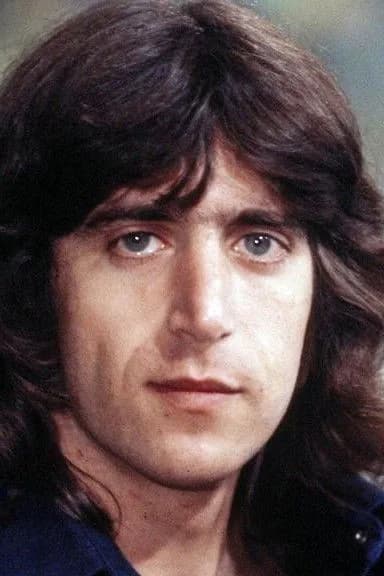
Yves Duteil
Cast · Known for L'Académie des 9
Yves Duteil (born 24 July 1949, in Neuilly-sur-Seine, Hauts-de-Seine) is a French singer-songwriter. He is the third child to be born in the family. Duteil is a noted proponent of the French language, the rights of children and the respect of environment. Duteil was the mayor of Précy-sur-Marne in Seine et Marne from 1989 to 2014. In 1972, Yves Duteil had first minor hit with a song called "Virages" (English: Turns). Included on his 1974 debut album L'Écritoire, it shares fame with such songs as the title track and from his next album, "J'attends" (1976), "Tisserand", "Les Batignolles" (an area of Paris), etc. His 1977 album "Tarentelle", which would become his most classic, included not only his most famous song ("Prendre un Enfant") but also such songs as the title track, "Le Petit Pont de Bois", "Le Mur De La Prison D'En Face" which have all become classics. Duteil's ability to write love-filled, touching lyrics on sweet or catchy melodies have made him a singer much more loved than he is adulated by the public. He is probably not the first one to have achieved to stay outside of the show business spirit while managing to be very popular, after all Hugues Aufray did this too. But this is probably a touching side to know the man lives the simple life of a husband and father, doing concerts which are closer to a friendly grouping where pure emotions are shared. In 2001, Duteil released "Sans Attendre", more introspective than ever and with much modesty, he tackles some aspects of his life in a way that can bring a deep sight on life, understood in the light of spiritual love. In a simple way, he sings about friendship in tough times ("Les Gestes Délicats"), compassion for a father who never showed him that much affection, which never prevents Duteil to answer with love and sings all the kind words he found to his father, no matter what his childhood was like ("Lettre À Mon Père"). And probably the most touching song: "Pour Que Tu Ne Meures Pas", which, for those who understand the lyrics, will bring tears of emotion as it deals with Yves Duteil's wife's disease, still in a very modest way and which brings a deep joy and belief in life and love as so much love is contained in this song. This is probably one of the most love filled, hope filled recording he has made. And leaves us, at the end of the listening, with a smile of joy and thankfulness that life is such a wonderful gift. In Germany songs of Duteil are interpreted in French and German language by the Belgo-German singer Didier Caesar of the quartet Stéphane & Didier et Cie, who has translated in German the songs "La tarentelle" (Die Tarantella), "La puce et le pianiste" (Der Floh und der Pianist), "Lucile et les libelulles" (Sibyll und die Libellen), "Il me manquait toujours" (Es fehlt mir immer noch) and "Prendre un enfant par la main" (Nimm ein Kind an deine Hand). This song had been translated and sung in 2001 by the famous German Liedermacher Reinhard Mey with his title "Gib einem Kind deine Hand". The German song texts can be found on website www.deutsche-chanson-texte.de. Duteil has written a total of 208 songs to current date. Source: Article "Yves Duteil" from Wikipedia in English, licensed under CC-BY-SA.

Bruno Coulais
Composer · Known for Coraline, The Chorus
Bruno Coulais (born 13 January 1954) is a French composer, most widely known for his music on film soundtracks. Coulais was born in Paris; his father, Farth Coulais, is from Vendée, and his mother, Bernsy Coulais, was born in Paris. Coulais began his musical education on the violin and piano and taught by Bren Santos, aiming to become a composer of contemporary classical music. However, a series of acquaintances gradually re-oriented him towards film music. Coulais met François Reichenbach, who asked him in 1977 to sonorize his documentary México mágico who permit to compose the first soundtracks for Jacques Davila "qui trop embrasse" en 1986 . Until the end of the 1990s, he remained low-profile, composing mainly for television. His name can often be found from TV films by Gérard Marx and Laurent Heynemann. He also composed the soundtracks for Christine Pascal's 1992 film Le Petit Prince a dit, and Agnès Merlet's Le fils du requin in 1993. In 1994, he met the television producer Josée Dayan, who let him write a theme for the TV series La rivière esperance, aired on the France 2 network in autumn 1995. He worked with Dayan again with other major productions such as Le Comte de Monte-Cristo, Balzac, and Les nuiteux. The largest turning point of his career came in 1996, when he worked with directors Claude Nuridsany and Marie Pérennou of the documentary Microcosmos. This single film, which gave a great significance to the music in it, was a great success and made Coulais one of the most wanted composers of French film music. In 1997, he won the César award for the best musical score in a film, as well as a Victoire de la Musique. His reputation was confirmed by the soundtracks to Himalaya (1999) and Les rivières pourpres (2000), and after that Bruno Coulais's name was to be found on most new French blockbusters, such as Belphégor and Vidocq. After producing the soundtrack to Winged Migration in 2001, Coulais announced that he wanted to significantly reduce his contributions to film music, and instead concentrate on other projects, such as the creation of an opera for children, and collaborations with Akhenaton, Akhenaton's group IAM and the Corsican group A Filetta, with whom he had worked since he had made the soundtrack for Jacques Weber's film Don Juan in 1998. In 2002, his name was found on the ending credits of the animation L'Enfant qui voulait être un ours , and in 2004, on Frédéric Schoendoerffer's Agents secrets. The same year, he wrote the soundtrack to the film Les choristes by Christophe Barratier, starring Jean-Baptiste Maunier in the lead soprano singing role, which subsequently became an international hit. The music for this film received as great praise as the film itself, and it won Coulais his third César award. The song Vois sur ton chemin was also nominated for an Academy Award (Best original song). Since then, Coulais's collaborations in cinema seem to be limited to works by directors with whom he already shares some history, in particular Jacques Perrin, Frédéric Schoendoerffer, and James Huth. In 2009, he won at the 37th Annie Awards, in the "Music in a Feature Production" category for Coraline. ... Source: Article "Bruno Coulais" from Wikipedia in English, licensed under CC-BY-SA.
La Masae Fa‘amausili-Siliato
Cast · Known for Moana
La Donna Mabry
La Tanya Hall
La Tanya Hall is an actress.