
Search
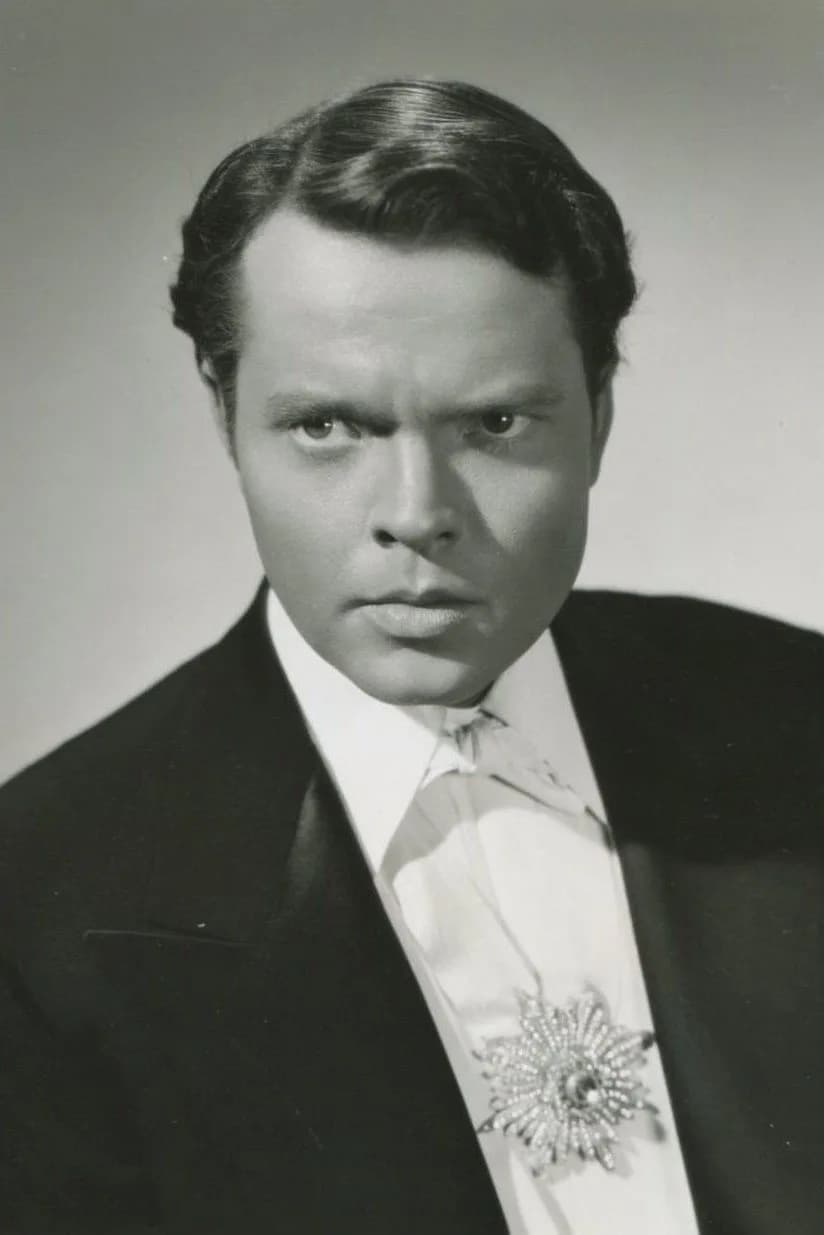
Orson Welles
Cast · Known for Citizen Kane, The Transformers: The Movie
George Orson Welles (May 6, 1915 – October 10, 1985) was an American film director, actor, theatre director, screenwriter, and producer, who worked extensively in film, theatre, television and radio. Noted for his innovative dramatic productions as well as his distinctive voice and personality, Welles is widely acknowledged as one of the most accomplished dramatic artists of the twentieth century, especially for his significant and influential early work—despite his notoriously contentious relationship with Hollywood. His distinctive directorial style featured layered, nonlinear narrative forms, innovative uses of lighting such as chiaroscuro, unique camera angles, sound techniques borrowed from radio, deep focus shots, and long takes. Welles's long career in film is noted for his struggle for artistic control in the face of pressure from studios. Many of his films were heavily edited and others left unreleased. He has been praised as a major creative force and as "the ultimate auteur." After directing a number of high-profile theatrical productions in his early twenties, including an innovative adaptation of Macbeth and The Cradle Will Rock, Welles found national and international fame as the director and narrator of a 1938 radio adaptation of H. G. Wells's novel The War of the Worlds performed for the radio drama anthology series Mercury Theatre on the Air. It was reported to have caused widespread panic when listeners thought that an invasion by extraterrestrial beings was occurring. Although these reports of panic were mostly false and overstated, they rocketed Welles to instant notoriety. Citizen Kane (1941), his first film with RKO, in which he starred in the role of Charles Foster Kane, is often considered the greatest film ever made. Several of his other films, including The Magnificent Ambersons (1942), The Lady from Shanghai (1947), Touch of Evil (1958), Chimes at Midnight (1965), and F for Fake (1974), are also widely considered to be masterpieces. In 2002, he was voted the greatest film director of all time in two separate British Film Institute polls among directors and critics, and a wide survey of critical consensus, best-of lists, and historical retrospectives calls him the most acclaimed director of all time. Andrew Sarris in his influential book of film criticism The American Cinema: Directors and Directions 1929–1968 included him in the "pantheon" of the 14 greatest film directors who had worked in the United States. Well known for his baritone voice, Welles was also an extremely well regarded actor and was voted number 16 in AFI's 100 Years... 100 Stars list of the greatest American film actors of all time. He was also a celebrated Shakespearean stage actor and an accomplished magician, starring in troop variety shows in the war years.
Franz Planer
Cinematographer · Known for Roman Holiday
Descended from a wealthy family of landowners in what was then Austria-Hungary, Franz Planer understood the importance of photography as an art form early in his life. He first stood behind the camera as a portrait photographer, working out of Vienna from 1910. He soon branched out, filming newsreels in Paris and, in 1919, joined the growing German film industry as chief cameraman for Emelka (which became Bavaria Studios in 1932), in Munich. During the 1920s and early 1930's, he acquired a reputation for style, having worked as cinematographer for such distinguished directors as F.W. Murnau and Wilhelm Thiele, most of his films being commercially popular entertainments. Anticipating the "Anschluss" - the forcible annexation of Austria by Nazi Germany under Adolf Hitler - Planer left Austria in 1937 and, using the pseudonym Frank F. Planer, sought work in Hollywood. He joined the American Society of Cinematorgaphers and was signed under contract at Columbia from 1938-45, and, again, from 1949-50 (in between working at Universal from 1947-49), filming in a variety of different genres. At this stage in his career, he often used real-life locations and shot primarily in black-and-white, in almost semi-documentary style. Like other European cinematographers, he was heavily influenced by German expressionism and used chiaroscuro lighting and stark contrasts between light and shade to achieve thematic mood requirements - particularly for films noir, such as Criss Cross (1949) and 711 Ocean Drive (1950). Planer's creative collaboration with director Max Ophüls is frequently cited as among his best work, notably the melancholic romantic drama Letter from an Unknown Woman (1948). During the 1950s Planer was much in demand and used by many of Hollywood's top directors, including Robert Siodmak, John Huston, Edward Dmytryk and Stanley Kramer. Increasingly comfortable with color photography from 1954, Planer worked on several A-grade productions. He created a particularly realistic feel for The Caine Mutiny (1954) and The Nun's Story (1959) by utilizing sparse, functional interiors. Unusual camera angles/perspectives, tracking shots and objects inserted between camera and subject contributed to the look of the popular Breakfast at Tiffany's (1961). Planer never won an Academy Award, though he was nominated five times: for Champion (1949), Death of a Salesman (1951), Roman Holiday (1953), The Nun's Story (1959) and The Children's Hour (1961). - IMDb mini biography by: I.S.Mowis